I love Thanksgiving. No, for real, I do. It's cozy, and thankful, and wonderful, and I just love it.
Not the food. But I've said that before. (I just searched by blog under the "Thanksgiving" label and came up with like 10 posts about Thanksgiving. I'm not kidding, I love everything about Thanksgiving but the food!)
Also something I've said before is that for the last several years I've had my Sunday School girls write thanksgiving lists in class. We read verses about being thankful, talk about why we should be thankful, and to Whom we should be thankful, and then try to think of things for which to be thankful (this year I remembered to be thankful for Chipotle. Mmm). Usually gets some pretty good results (one of our most frequent Sunday School-and-Gospel speakers is famous for reminding us to be thankful for everything, including chairs, so almost all the girls remembered this and marked that they were thankful for chairs), but this year I heard one I hadn't heard before.
While reading around an item or two from our list one girl shared that she was thankful for my eyebrows.
"Uh, my eyebrows? Specifically me? Or you're thankful for your eyebrows?"
"Oh no, Miss Joanne, not my eyebrows. Yours. I think they look okay with your face."
"Mmmmmmmnmmmmmmmmmmmmmmmk."
And that, my friends, is the story of how I got a complex about my eyebrows and I'm not even sure why, because, comfortingly enough, they are "okay."
(Just because I couldn't resist, I searched the KJV for references to eyebrows. There's only one direct reference, and in this reference the guy is straight-up shaving his off. Maybe eyebrows are meant to be expendable?)
Showing posts with label Leviticus. Show all posts
Showing posts with label Leviticus. Show all posts
Tuesday, November 25, 2014

Thursday, September 29, 2011
Bibley words
I love words. Truly I do. I one time read Fly By Night not so much for the plot but because the author so clearly loved words and knew how to use them with finesse. I read Reading the OED not so much because I applauded the guy who had no job so he could read a dictionary, but because anyone who spent a year reading the Oxford English Dictionary has a level of Word Love I could only hope to one day reach.
So, help me out here. What do you like to run across in the Bible? Do you enjoy running across words like sheriff? parlours? darling? silly doves? when people in the Bible say 'aha'? the brief Santa Claus feeling you get when reading Zechariah 2:6?
All that being said, I was thinking about words in the Bible. It, obviously, is full of the Words of Life, which is very important, but I was thinking specifically of the fact that since I read the King James Version, I run across so very many fun words. Even if they're not traditionally "fun" words, it's still amusing to run across them in the KJV, like when it references "stuff" in the Bible, discusses the belching of heathens, or those times it talks about taverns or aliens (well, there's only one reference to taverns, as I recall), it just seems amusing because, well, they seem more amusing in the context of the Bible (don't laugh, but I still am amused when I run across references to frying pans in the Bible--which potentially goes to show that I should get out more). Not to sound irreverent, but it's true.
But any words in the Bible ending in -some, like noisesome, or burdensome... don't you wish we still used those words? I know I do.
This isn't a complete list, and PLEASE let me know if you have favorites that aren't on this list, but anyhow, here's a vague off-the-top-of-my-head list of words I like to run across in the Bible. And I'm sure these words aren't even necessarily all obsolete, but they're obsolete enough to make me wish that more people read their Bibles so we could hurry up and get these words back into the common vernacular.
Ladeth. Because I think we should still use it. I wish the "eth" thing hadn't gone out of style so long ago. "Why are we letting him road trip with us? He ladeth our car down with his longboards and it's just getting annoying."
Magnifical. Because WHAT AN AWESOME WORD. I use it sometimes and was derided once for it being made-up. "Not-uh. It's in the Bible." "Is not." "Is too." "Where?" "The... temple stuff somewhere. You know." "You're making that up." "Am not!" You get the idea. But it's good for any or all occasions. The "magnifical cheesecake" works as well as "the Colosseum was magnifical." It's sort of appropriate for any situation.
Anything ending in -ish. When I read the Law of the Leper chapter and it describes things as being greenish and reddish, or when Job talks about something being "blackish" it just cheers my soul. I went through a multi-year phase where everything ended in an -ish. A friend of mine finally started calling me Joish. But you can imagine how cool it would be if we brought back the color -ishes. "You just repainted, right? What color?" "Reddish." "Oh, like... more pink." "No, I mean reddish. That's the color." "Yeah... that makes SO much sense. Or not."
Gazingstock. Because it seems to so nicely combine being put in stocks as an example and a much-stared-at curiosity. "My Sunday School teacher made me the gazingstock of the class when he caught me texting, which is NO FAIR because the other kids do it all the time and don't get in trouble!"
Bountifulness. "The bountifulness of this Thanksgiving feast reminds me yet again of how much I have for which to be thankful!" And also, costliness. Because all words deserve more than one suffix.
Solemnities. This isn't obsolete, I know, but I feel like the number of occasions which could be referred to as "solemnities" are dwindling in our society. But who knows? Maybe they use this all the time in England or something. "The solemnities of the past week reminded us that the queen isn't getting any younger, and some changes are surely coming our way." Heh. I don't even really know how you'd use solemnities properly. I'll think of something.
Worthies. Every time I stumble across this word in Nahum I can't help but think of the word "homies." "F'real, what's he doin'?" "Oh, he had to talk to all his worthies about their excessive stumbling, yo."
Troublous. "These are troublous times we're in. First they came for the users of blue pens, but I wasn't a user of blue pens, so I didn't stop them. Then they came for the ones who left the trash cans on the curb for days but I was above that, so I didn't step in. Now they've come for those of us who spend altogether too much time trying to slide words like 'insomuch' and 'notwithstanding' into everyday conversation, and there's nobody left to stop them!"
Holily. I'm not going to lie: I didn't even notice this word until a few months ago when I was Bibleing in Thessalonians with my Bibleing buddies. I'd obviously seen it before, but somehow missed it. Clearly, since then I've delighted in the word, but honestly, I haven't found many things that can be described as having been done "holily." I'm still working on that.
So, help me out here. What do you like to run across in the Bible? Do you enjoy running across words like sheriff? parlours? darling? silly doves? when people in the Bible say 'aha'? the brief Santa Claus feeling you get when reading Zechariah 2:6?
And I have the feeling that nobody uses the links I sometimes provide for Bible references and such, and I really didn't feel like spending half of my evening looking up these places, so if you're curious as to where these words are in the Bible, just go to blueletter or Biblegateway and look them up.
Thanks for bearing with me. When I started thinking about this last night I had no idea I'd think of so many!
Thursday, May 6, 2010
Spread it with a little margin
I love reading the margins in my Bible. I'd guess I've read very nearly every footnote my Bible has to offer, on account of reading the marginal notes along with the actual text when I read. But I recently came across a good one in Numbers 4. The verse (23, for starters, in case you want to look it up, though actually, several verses in this chapter use this same word) was about entering in to perform the service, to do the work in the tabernacle of the congregation.
Well, instead of just being "service" right there, it's really the Hebrew root word for going out to war. And it sort of makes sense, since now-a-days it's not uncommon to hear someone say, "I was in the Service for six years back in the fifties." We call the military the Service these days, so I guess it makes sense that it all stems from each other.
But I just thought it was hilarious that the word was the same. I'm not typically one to grouse about work, but the point is, work is work. You may be in charge of animal sacrifices (like in this chapter), or you may be the person who checks the chlorine levels at the neighbourhood pool. Either way, sometimes crazy stuff can happen. Half the time it's like organized warfare.
The other thing I was thinking was this: you know how the Levites just did the tabernacle stuff, and didn't go out to war? Well, if this is sort of like war, then did they get to skip out of work for a year after they got married? Because the rest of the tribes got a get-out-of-war-free pass for a year after they tied the knot, so why not the Levites? Their version of war was service in the tabernacle, but hey, no fair that those young dudes from the tribe of Simeon got time off for finding a wife, and the Levites didn't, you know?
Not like life is fair. Or that it was "fair" for the Levites to be the only ones to be consecrated to the work of the Lord. They were just stand-ins, so to speak, for all the firstborn from all the tribes, after all.
So now, in my head, whenever the Levites got married, they were off work duty for a year. I'll get confirmation (or deconfirmation) of it when I get to Heaven, I'm sure, but the thought amused me. Quite frankly, I'd never noticed that verse before.
Isn't reading the Bible grand? Something new every day. I love it!
Well, instead of just being "service" right there, it's really the Hebrew root word for going out to war. And it sort of makes sense, since now-a-days it's not uncommon to hear someone say, "I was in the Service for six years back in the fifties." We call the military the Service these days, so I guess it makes sense that it all stems from each other.
But I just thought it was hilarious that the word was the same. I'm not typically one to grouse about work, but the point is, work is work. You may be in charge of animal sacrifices (like in this chapter), or you may be the person who checks the chlorine levels at the neighbourhood pool. Either way, sometimes crazy stuff can happen. Half the time it's like organized warfare.
The other thing I was thinking was this: you know how the Levites just did the tabernacle stuff, and didn't go out to war? Well, if this is sort of like war, then did they get to skip out of work for a year after they got married? Because the rest of the tribes got a get-out-of-war-free pass for a year after they tied the knot, so why not the Levites? Their version of war was service in the tabernacle, but hey, no fair that those young dudes from the tribe of Simeon got time off for finding a wife, and the Levites didn't, you know?
Not like life is fair. Or that it was "fair" for the Levites to be the only ones to be consecrated to the work of the Lord. They were just stand-ins, so to speak, for all the firstborn from all the tribes, after all.
So now, in my head, whenever the Levites got married, they were off work duty for a year. I'll get confirmation (or deconfirmation) of it when I get to Heaven, I'm sure, but the thought amused me. Quite frankly, I'd never noticed that verse before.
Isn't reading the Bible grand? Something new every day. I love it!
Friday, April 30, 2010
If thy foot offends thee--
Cut it off!
Just kidding.
But I did step on a toy train the other day (Percy, I believe) and ever since that time, my feet have been uncomfortable to use. And I do mean that. A bruised sole does not feel very nice. If my feet could somehow be wrapped in bubble wrap (which would come with the built-in-charm of having boredom busted at a moment's notice!) or maybe something equally created to take the pressure off my feet, it would be awesome.
It's been making me think, though. Some frightening words, yes. Me? Thinking?
I've been reading through Leviticus (sort of at a snail's pace, due to me actually trying to pay attention to the feasts and diseases and other odd things Leviticus teaches us) and multiple times in the book, it mentions that when offerings/consecration were going on (consecration: another one of my favourite topics!) there was blood put on the ear (the right ear, to be exact. And not just any place on the ear, but the tip of the ear), the hand (again, the right one. Personally, I think this means that left-handed people aren't as sanctified as the rest of us. Which worries me, because I'm sort of confused in the matter of which-handed I am), and the great toe on the right foot (never calling it a big toe again: Great Toe sounds much better!) during this process.
Which, obviously, reminds us to watch where we go, what we do, and what we listen to. I know we sort of pretend that we don't have any control over what goes in and out of our ears ("I heard it on the bus!") but we have a lot more control over such things than we think.
I just ran out of steam (haha, like Percy the train is liable to do). I don't remember where I was going with this except to say that while my bruised foot has been causing me grief, it makes me consider in much greater detail exactly how much my feet mean to me. I love them, I use them, and I'd best watch where they walk. Amen!
*wanders away, humming, "Oh be careful little feet where you go" while trying to drown out the sound of the world all around*
Just kidding.
But I did step on a toy train the other day (Percy, I believe) and ever since that time, my feet have been uncomfortable to use. And I do mean that. A bruised sole does not feel very nice. If my feet could somehow be wrapped in bubble wrap (which would come with the built-in-charm of having boredom busted at a moment's notice!) or maybe something equally created to take the pressure off my feet, it would be awesome.
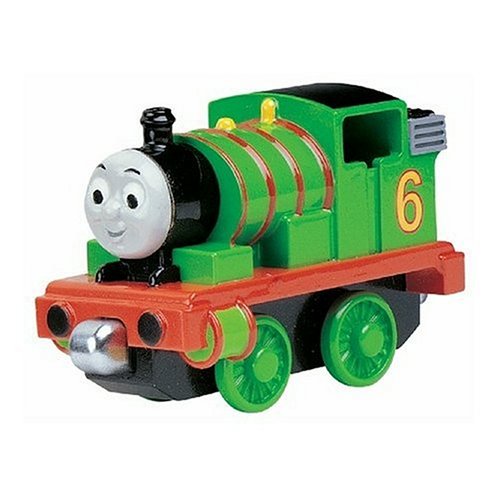
It's been making me think, though. Some frightening words, yes. Me? Thinking?
I've been reading through Leviticus (sort of at a snail's pace, due to me actually trying to pay attention to the feasts and diseases and other odd things Leviticus teaches us) and multiple times in the book, it mentions that when offerings/consecration were going on (consecration: another one of my favourite topics!) there was blood put on the ear (the right ear, to be exact. And not just any place on the ear, but the tip of the ear), the hand (again, the right one. Personally, I think this means that left-handed people aren't as sanctified as the rest of us. Which worries me, because I'm sort of confused in the matter of which-handed I am), and the great toe on the right foot (never calling it a big toe again: Great Toe sounds much better!) during this process.
Which, obviously, reminds us to watch where we go, what we do, and what we listen to. I know we sort of pretend that we don't have any control over what goes in and out of our ears ("I heard it on the bus!") but we have a lot more control over such things than we think.
I just ran out of steam (haha, like Percy the train is liable to do). I don't remember where I was going with this except to say that while my bruised foot has been causing me grief, it makes me consider in much greater detail exactly how much my feet mean to me. I love them, I use them, and I'd best watch where they walk. Amen!
*wanders away, humming, "Oh be careful little feet where you go" while trying to drown out the sound of the world all around*
Wednesday, April 21, 2010
Best left unsaid
Our family dinners tend to be sort of an open form for chaos. I don't mean that in a bad way, and in fact, our family dinners are pretty much the best ever. Sometimes, however, my brother and I get a little too chatty for my parents' tastes.
It's bad enough that we frequently reminisce about the days before we understood Ezekiel 4, question exactly what every colour of scab and hair in Leviticus 13 means, but Monday night at dinner we spent an inordinate amount of time discussing Judges 19.
For those who don't recall the story, it's the charming little tale of the time that the Levite and his concubine spent the night in Gibeah, and due to some terrible treatment from the men of that place, the concubine died. Ahem. Anyhow, the Levite realized that he should stand up for this wrong (or something), and decided to prove a point. So he took the dead concubine, cut her in twelve pieces, and sent her via messenger to the twelve tribes of Israel, hoping to incite righteous anger. Or something. That he did, and by the time all was said and done, thousands of Israelites had given their lives fighting for the cause. This, of course, inspired the whole Rock-of-Rimmon passage, which is a story for another time.
So the discussion my brother and I were so animatedly having was that matter of exactly how the woman would have been divided. For instance, if the arms/hands were divided into three pieces, then you wouldn't have need of the legs/feet to be divided into three pieces. Perhaps the larger the tribe was, the larger the piece was?
Anyhow, my parents didn't seem to have much appreciation for our highly spiritual discussion, and shot it down. But seriously, the quandary is remarkable!
It brings to mind the age-old discussion from Revelation 13 about the heads and horns/crowns. How can seven heads have ten horns/crowns? Which heads get the extra horns/crowns? Is it symmetrical, like the heads on either end and the one in the middle get those extra horns/crowns? It's just so confusing.
But, these are things that don't really make a difference in the long run. There are many, many other things in the Word of God I should be spending my time considering.
Like, you know, whether or not the lions in Solomon's temple were real or not. Always a good one.
It's bad enough that we frequently reminisce about the days before we understood Ezekiel 4, question exactly what every colour of scab and hair in Leviticus 13 means, but Monday night at dinner we spent an inordinate amount of time discussing Judges 19.
For those who don't recall the story, it's the charming little tale of the time that the Levite and his concubine spent the night in Gibeah, and due to some terrible treatment from the men of that place, the concubine died. Ahem. Anyhow, the Levite realized that he should stand up for this wrong (or something), and decided to prove a point. So he took the dead concubine, cut her in twelve pieces, and sent her via messenger to the twelve tribes of Israel, hoping to incite righteous anger. Or something. That he did, and by the time all was said and done, thousands of Israelites had given their lives fighting for the cause. This, of course, inspired the whole Rock-of-Rimmon passage, which is a story for another time.
So the discussion my brother and I were so animatedly having was that matter of exactly how the woman would have been divided. For instance, if the arms/hands were divided into three pieces, then you wouldn't have need of the legs/feet to be divided into three pieces. Perhaps the larger the tribe was, the larger the piece was?
Anyhow, my parents didn't seem to have much appreciation for our highly spiritual discussion, and shot it down. But seriously, the quandary is remarkable!
It brings to mind the age-old discussion from Revelation 13 about the heads and horns/crowns. How can seven heads have ten horns/crowns? Which heads get the extra horns/crowns? Is it symmetrical, like the heads on either end and the one in the middle get those extra horns/crowns? It's just so confusing.
But, these are things that don't really make a difference in the long run. There are many, many other things in the Word of God I should be spending my time considering.
Like, you know, whether or not the lions in Solomon's temple were real or not. Always a good one.
Subscribe to:
Posts (Atom)